
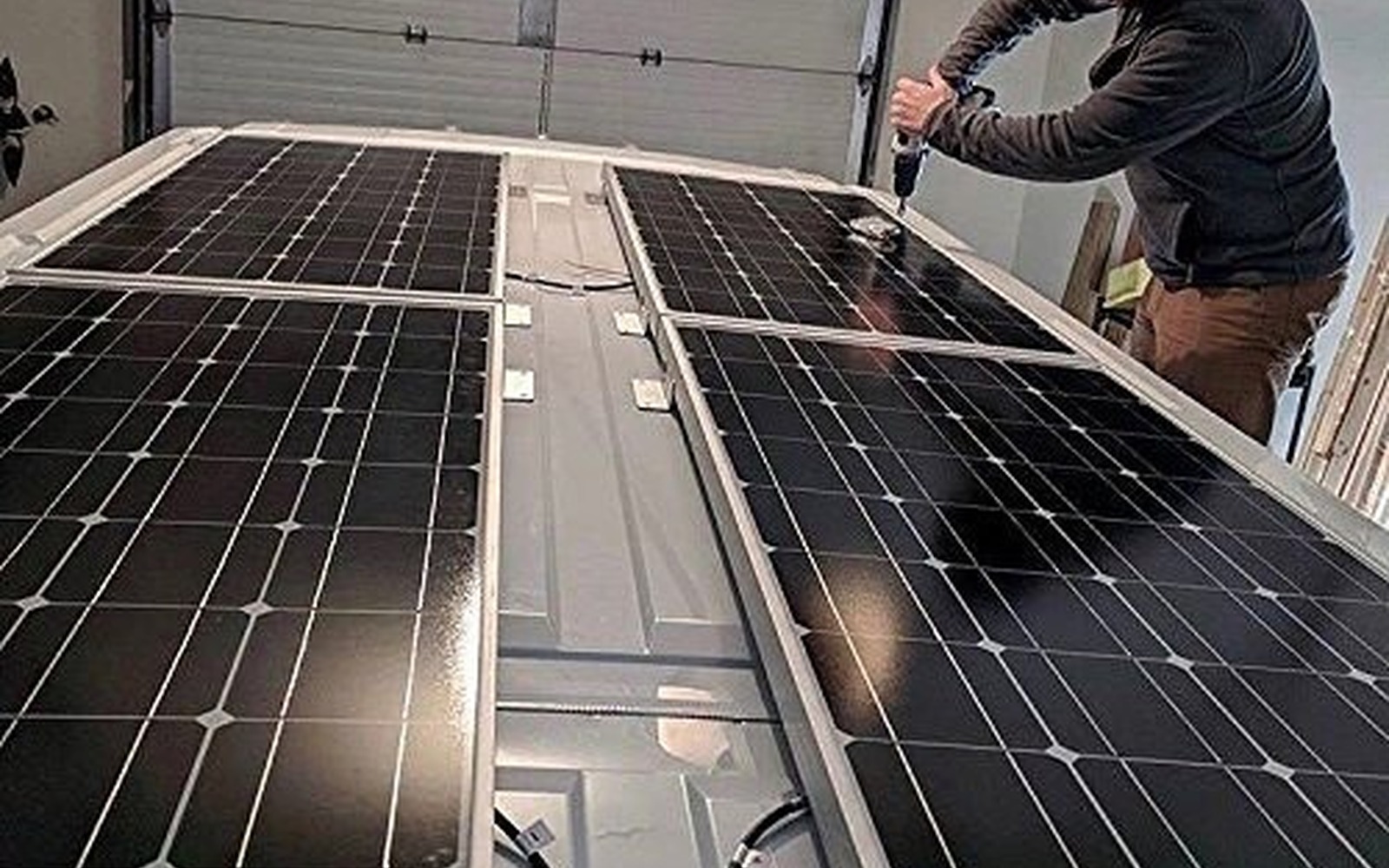
On a 12 V vehicle system with an MPPT controller, wire them in series — unless shading is likely, in which case wire them in parallel. That one sentence covers most installations. The reasoning matters though, because getting it wrong costs you either output or a controller.
What each one does
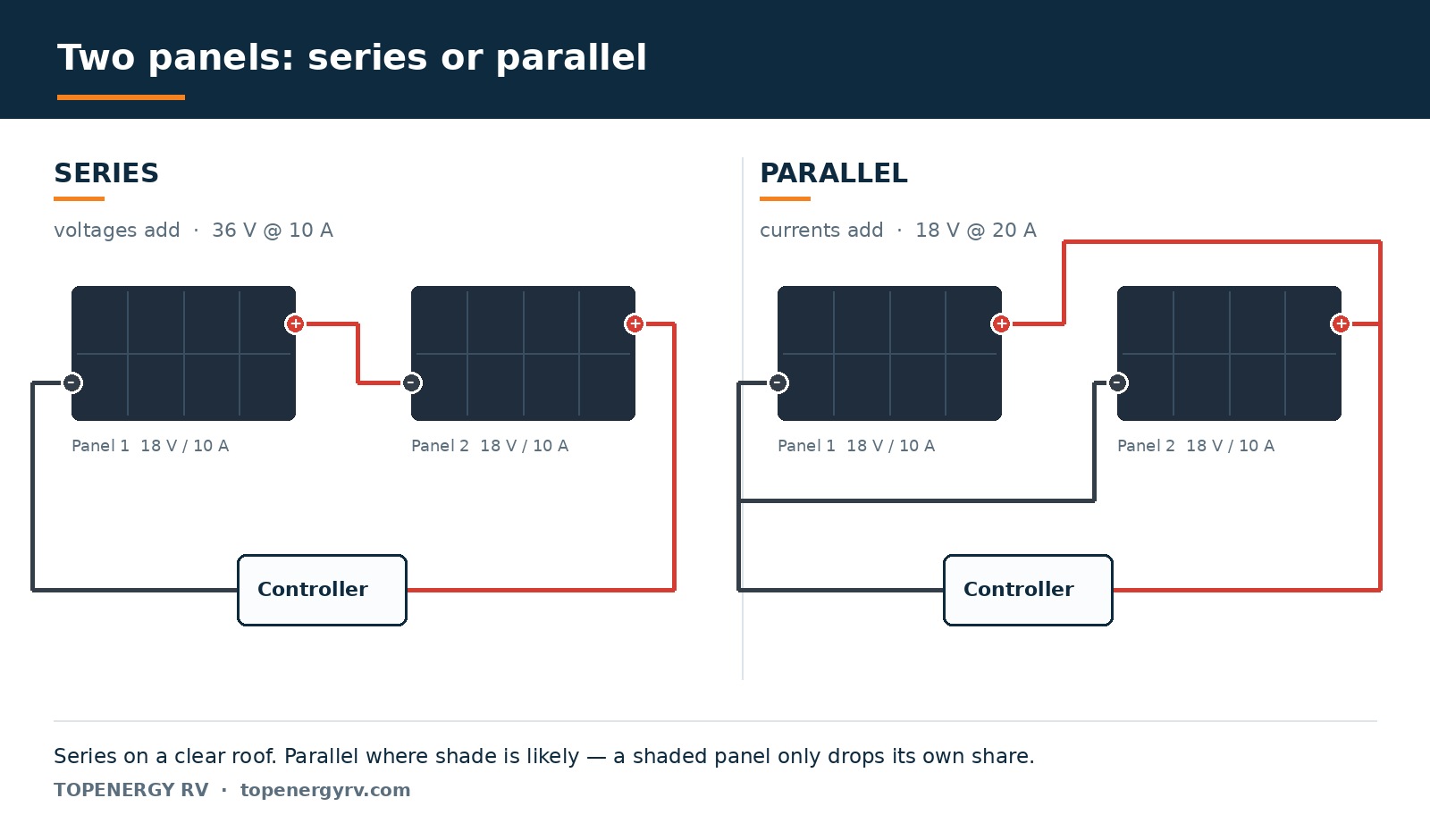
- Series (positive of one panel to negative of the next): voltages add, current stays the same. Two 18 V panels become 36 V at the same amps.
- Parallel (all positives together, all negatives together): currents add, voltage stays the same. Two panels at 10 A each become 20 A at 18 V.
Same total watts either way. What changes is how those watts travel down the cable, and what happens when one panel is unhappy.
Why series usually wins
- Thinner cable does the job. Losses in a cable go up with the square of the current. Halve the current and you quarter the loss — so a series pair can run on smaller cable over the same distance.
- MPPT works better with headroom. An MPPT controller converts surplus voltage into charging current. Give it 36 V into a 12 V battery and it has plenty to work with, particularly on a dull morning when a single panel might not even reach charging voltage.
- Fewer connectors. A series string is a chain; a parallel array needs combiners.
Why parallel wins when there is shading
This is the part that decides most RV installations, because a vehicle roof is a shading environment. An air conditioner, a satellite dome, a roof light, an overhanging branch at the campsite — the shadow moves across the roof all day.
In series, the string runs at the current of its worst panel. Shade one panel meaningfully and it throttles everything wired with it — not proportionally, but down to the shaded panel’s level. In parallel, a shaded panel simply contributes less while the others carry on.
So: a motorhome roof full of obstacles is usually a parallel job; a clean van roof with two panels side by side and nothing above them is usually a series job.
Two things that will damage something
- Series and the controller’s maximum input voltage. Panel open-circuit voltage rises as temperature falls. Three panels that sit safely inside the limit on a warm day can exceed it on a cold bright morning — and exceeding it damages the controller. Always check Voc at the coldest temperature you will see, not at 25 °C. This is the single most common way people destroy a charge controller.
- Parallel and fusing. If one panel in a parallel array develops a fault, the combined current of all the others can flow back into it. On two panels this is usually tolerated; from three upwards, in-line fuses stop being optional.
Mixing panels — don’t, mostly
Wiring different panels together drags the array toward the weaker one: in series the string follows the lowest current; in parallel it follows the lowest voltage. If you must mix — adding a panel years later, say — parallel is the more forgiving of the two, and give each different panel its own controller input if you can.
What you need to wire it
- Series: just extension cable with MC4 ends. Panel to panel, then down to the controller.
- Parallel: a T-type combiner sized for the number of panels — we stock 2 through 7 — plus fusing from three panels up. Check the connector rating against the combined current, not one panel’s.
- Either way: size the cable for the run and the current. Undersized cable wastes output as heat, permanently.
Send us the panels, the number of them and a note on what shades the roof, and we will tell you how to wire it and quote the parts — request a quotation.
Have a question about your build?
Tell us the vehicle, the roof dimensions and your daily consumption. We will size the system and quote it — and say so if what you are asking for will not work.